Common Kingfisher: A Close-Up Look at the Jewel of the Waterside
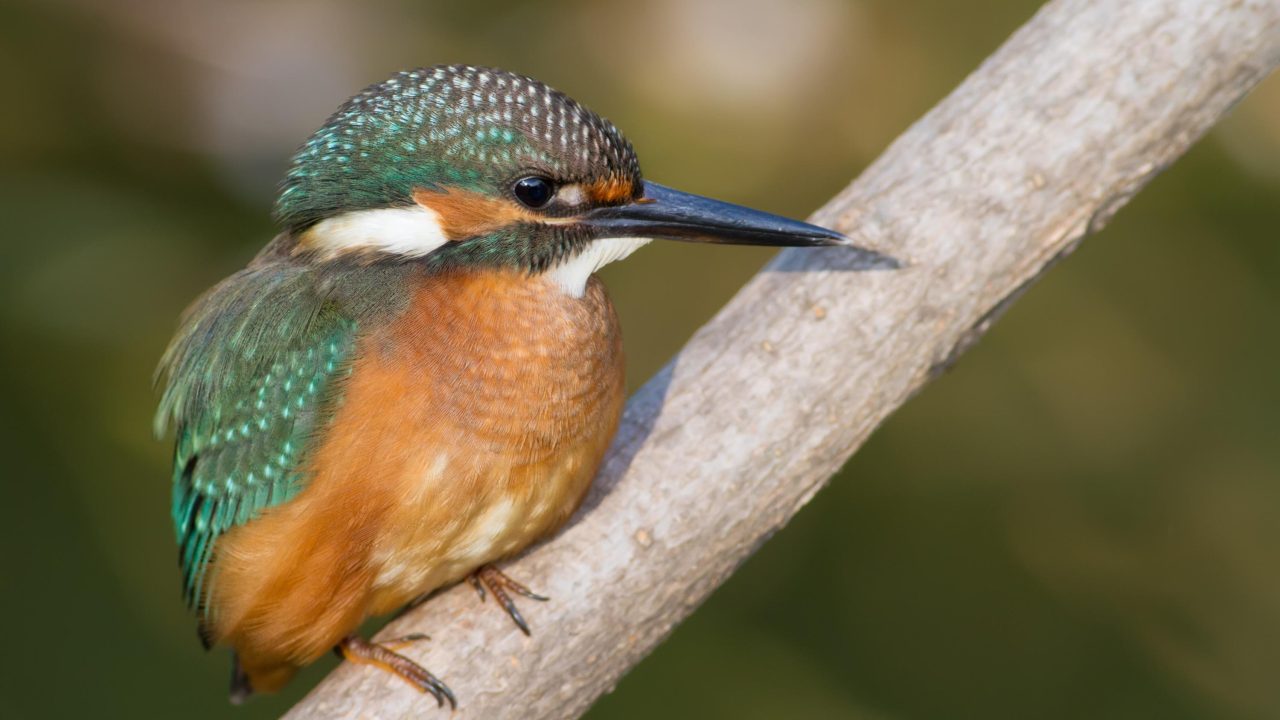
Perched on a pale branch with its long black bill pointed forward, this common kingfisher looks like a living gemstone against the soft green background. The close-up view reveals the bird’s glowing blue-green crown, warm orange underparts, white throat patch, and compact body built for sudden, precise movement.
The common kingfisher is one of the most recognizable small fishing birds of Europe, Asia, and parts of North Africa. Known scientifically as Alcedo atthis, it is admired for its brilliant colors, high-speed flight, and remarkable ability to dive after fish from a still perch.
What Is a Common Kingfisher?
The common kingfisher is a small, brightly colored bird in the family Alcedinidae, the kingfisher family. Its scientific name is Alcedo atthis. It belongs to the order Coraciiformes, a group that also includes bee-eaters, rollers, and other visually striking birds.
Despite its name, the common kingfisher can be surprisingly difficult to see. It often appears as a fast blue flash flying low over rivers, ponds, canals, lakes, wetlands, and quiet streams. It spends much of its time near water, where it watches for fish and aquatic invertebrates from branches, reeds, rocks, or exposed roots.
What the Photo Reveals
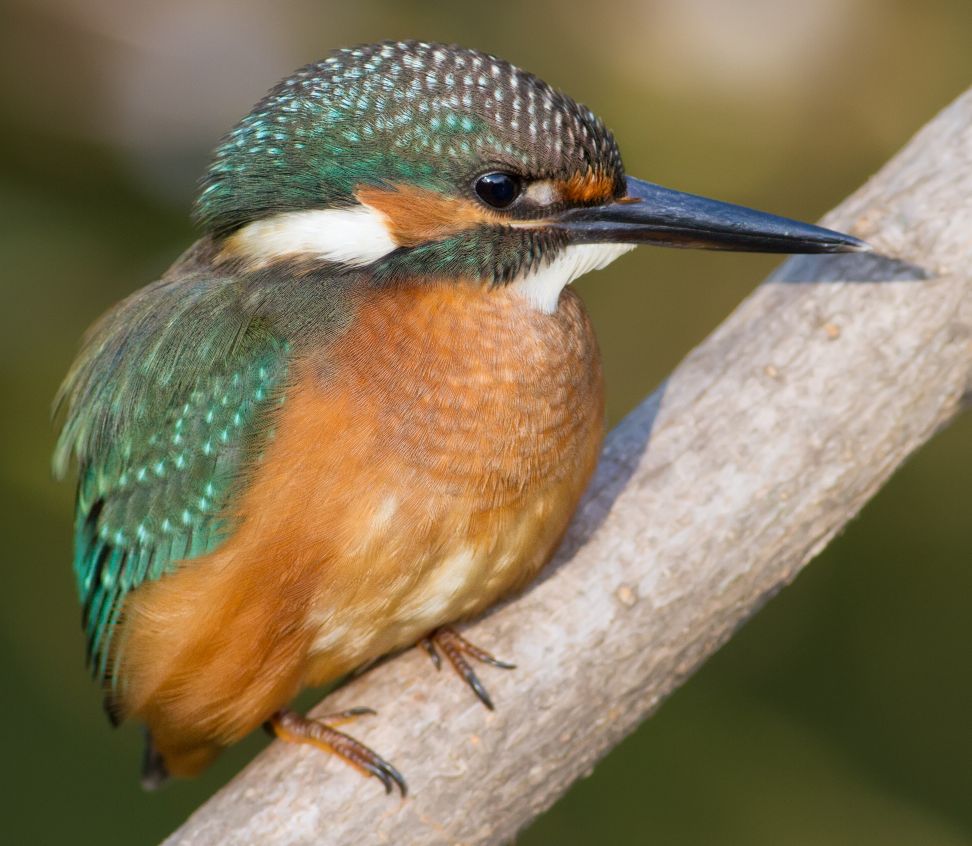
This image shows a classic close-up view of a common kingfisher at rest. The bird is perched sideways on a slender branch, giving a clear look at the profile of its head, bill, chest, and upperparts. The eye-level perspective makes the bird feel close and alert without disturbing its natural posture.
The long, straight bill is one of the most important features in the image. In kingfishers, this spear-like bill is used to seize slippery prey, especially small fish. Its shape helps the bird cut cleanly through the water during a dive and grip prey securely after impact.
The orange belly and chest contrast strongly with the blue-green back and crown. These colors are not simply decorative. The blue and green tones are partly produced by the microscopic structure of the feathers, which reflects light and creates an iridescent effect. Depending on angle and light, the same bird may appear turquoise, cobalt, emerald, or deep blue.
The white patch on the side of the neck and throat helps break up the face pattern and is useful for identification. The orange area near the eye and cheek, the dark eye stripe, and the compact body all match the typical appearance of a common kingfisher.
The blurred green background suggests vegetation near water, while the branch provides the kind of raised perch this bird uses for scanning. From such a position, a kingfisher can look down into clear or shallow water, judge the position of prey, and launch in a direct plunge.
Appearance and Identification
The common kingfisher is a small bird, but its colors make it unmistakable when seen well. It has a short tail, large head, compact body, bright blue or blue-green upperparts, orange underparts, white throat and neck markings, and a long pointed bill.
Adults usually show rich orange on the chest and belly, with brilliant upperparts that can appear electric blue in flight. The head often has fine pale speckling, visible in close-up photos like this one. Its legs are short and reddish to orange, and its feet are adapted for gripping perches rather than walking.
Males and females look similar, but the bill can provide a clue. Adult males usually have a mostly dark bill, while adult females often show orange or reddish color on the lower mandible. In this image, the bill appears mostly dark, but sex should not be claimed with certainty from a single photo unless the lower bill is clearly visible.
Habitat and Geographic Range
The common kingfisher is widely distributed across Europe, North Africa, the Middle East, and much of Asia. It is closely associated with water, especially places that provide clear visibility, small fish, and suitable perches.
Typical habitats include slow-flowing rivers, streams, canals, lakes, ponds, marsh edges, reservoirs, estuaries, and sheltered coastal waters. During breeding season, it also needs suitable banks where it can dig a nesting tunnel. These banks are often made of soft earth, sand, or compacted soil near water.
In colder regions, some common kingfishers move in winter if waterways freeze. In milder climates, many remain in the same area year-round as long as open water and prey are available.
Diet and Feeding Behavior
The common kingfisher feeds mainly on small fish, but it may also take aquatic insects, freshwater shrimp, tadpoles, small crustaceans, and other small water animals. Its diet varies depending on season, habitat, and local prey availability.
Its hunting method is highly specialized. The bird usually waits on a perch above or beside the water, watching carefully for movement below the surface. When it spots prey, it dives headfirst, sometimes with wings partly closed, enters the water, grabs the prey with its bill, and returns to a perch.
After catching a fish, the kingfisher often beats it against the perch to stun or kill it. The prey is then swallowed headfirst, which helps fins and spines pass more smoothly down the throat.
Daily Behavior
Common kingfishers are often solitary outside the breeding season. They may defend feeding territories along stretches of river or shoreline, especially where good fishing perches are limited.
Their flight is fast, direct, and usually low over water. Many people notice the bird first as a sudden blue streak crossing a stream. When perched, it can remain still for long periods, turning its head slightly as it scans the water.
Kingfishers are active during daylight. Much of the day is spent hunting, resting, preening, and moving between feeding perches. Because small birds lose heat quickly, successful feeding is especially important in cold weather.
Reproduction and Life Cycle
During the breeding season, common kingfishers nest in tunnels dug into vertical or steep banks. Both members of a pair may help excavate the tunnel, which leads to a chamber where the eggs are laid.
The female typically lays several white eggs. Both parents may take part in incubation and feeding the chicks. Young kingfishers grow quickly and require frequent deliveries of small fish and aquatic prey.
After fledging, young birds must learn to fish efficiently. This early stage can be dangerous, as inexperienced juveniles may struggle with diving, prey handling, bad weather, or competition for feeding areas.
Special Adaptations
The common kingfisher’s body is shaped for precision fishing. Its large head and long bill help it strike accurately at small prey, while its compact body reduces drag during a dive. The short tail and strong wings support fast, direct flight along narrow waterways.
Its eyes are especially important. A diving bird must judge prey position through air and water, where light bends differently. Kingfishers adjust quickly as they enter the water, helping them target fish with remarkable accuracy.
The brilliant plumage also has a biological explanation. The blue-green colors are largely structural, created by how feather surfaces scatter light. This means the bird’s color can shift dramatically with sunlight, shade, and viewing angle.
Ecological Role
Common kingfishers are small predators in freshwater and coastal ecosystems. By feeding on small fish and aquatic invertebrates, they form part of the natural food web linking waterways, insects, fish, and birds.
Their presence can also indicate healthy waterside habitat. Although they can live in a variety of environments, they depend on accessible prey, suitable perches, and nesting banks. Pollution, heavy disturbance, bank modification, and poor water quality can reduce the habitat value of rivers and wetlands for kingfishers.
Is the Common Kingfisher Dangerous to Humans?
The common kingfisher is not dangerous to humans. It is a small wild bird that avoids close contact and relies on speed, alertness, and camouflage rather than aggression.
Like all wild birds, it should be observed respectfully. Nesting sites should never be disturbed, especially because kingfishers use tunnels in banks that can be damaged by trampling, digging, or repeated human approach.
Conservation Status and Threats
The common kingfisher is currently listed globally as Least Concern by the IUCN Red List, reflecting its wide distribution. However, local populations can decline where habitat quality is poor or breeding banks are lost.
Major threats include river pollution, loss of natural banks, disturbance near nest sites, canalization of waterways, reduction of fish populations, and severe winters that freeze feeding areas. In parts of Europe, regional conservation assessments may show greater concern than the global status, so local protection and habitat management remain important.
Interesting Facts About the Common Kingfisher
- It is often seen as a flash of blue. Many sightings last only a second as the bird flies rapidly along the water’s surface.
- Its colors change with the light. The blue and green tones come from feather structure, not just pigment.
- It nests underground. Instead of building an open nest, it excavates a tunnel into a bank.
- It swallows fish headfirst. This helps reduce the risk of fins catching in the throat.
- It depends on clear hunting conditions. Muddy water, pollution, or lack of perches can make feeding more difficult.
Frequently Asked Questions About the Common Kingfisher
What is the scientific name of the common kingfisher?
The scientific name of the common kingfisher is Alcedo atthis.
Where does the common kingfisher live?
It lives across much of Europe, Asia, parts of North Africa, and nearby regions. It is usually found near rivers, streams, ponds, lakes, wetlands, canals, and sheltered coastal waters.
What does the common kingfisher eat?
It mainly eats small fish, but it may also feed on aquatic insects, freshwater shrimp, tadpoles, crustaceans, and other small water animals.
Why is the common kingfisher so colorful?
Its blue-green upperparts are partly caused by structural coloration, where feather surfaces reflect and scatter light. This creates the bright, shifting jewel-like color seen in sunlight.
How does a common kingfisher catch fish?
It watches from a perch, dives headfirst into the water, catches prey with its long bill, and returns to a perch to handle and swallow the fish.
Is the common kingfisher rare?
Globally, it is not considered threatened, but it can be uncommon or declining in some local areas. Its visibility also depends on habitat quality, season, and how quietly an observer approaches waterside areas.
Can common kingfishers swim?
They do not swim like ducks. They dive into water to catch prey and then use their wings to return quickly to the air or a perch.
Do common kingfishers migrate?
Some populations are resident, while others move seasonally, especially where winter ice prevents access to fish. Movement patterns vary by region and climate.
Trusted Sources